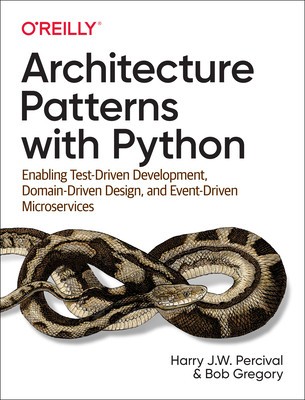

Enterprise Architecture Patterns with Python: How to Apply DDD, Ports and Adapters, and Enterprise Architecture Design Patterns in a Pythonic Way

- Ramburs direct la vanzator
- Avans
- Online

 )

Descriere
Raporteaza produsVânzatorul este direct răspunzator pentru produsul afișat în această pagină.
-
AutorHarry Percival and Bob Gregory
-
Tip produsCarte
Specificatii
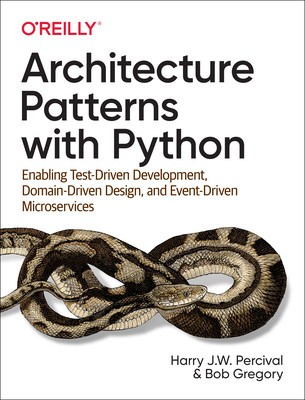
3,As Python continues to grow in popularity, projects are becoming larger and more complex. Many Python developers are taking an interest in high-level software design patterns such as hexagonal/clean architecture, event-driven architecture, and the strategic patterns prescribed by domain-driven design (DDD). But translating those patterns into Python isn't always straightforward. With this hands-on guide, Harry Percival and Bob Gregory from MADE.com introduce proven architectural design patterns to help Python developers manage application complexity--and get the most value out of their test suites. Each pattern is illustrated with concrete examples in beautiful, idiomatic Python, avoiding some of the verbosity of Java and C# syntax. Patterns include: Dependency inversion and its links to ports and adapters (hexagonal/clean architecture) Domain-driven design's distinction between Entities, Value Objects, and Aggregates Repository and Unit of Work patterns for persistent storage Events, commands, and the message bus Command-query responsibility segregation (CQRS) Event-driven architecture and reactive microservices
Galerie foto
Modalitati de livrare si plata
LIVRARE
In Bucuresti
-
- Prin Curier rapid - 14.9 Lei in max. 11 zile lucratoare
In Romania:
-
- Prin Curier rapid - 14.9 Lei in max. 11 zile lucratoare
PLATA
- - Ramburs direct la vanzator
- - Avans
- - Online
Politica de retur
- - Produsul se poate returna in maxim 3 zile lucratoare
- - Metoda de retur: Ramburs contravaloare produs
- - Costul transportului va fi suportat de catre cumparator
- - Alte detalii: Retur acceptat in conditiile Garantiei de Livrare
Spune-ti parerea acordand o nota produsului










Nu ai gasit ce cautai?

Instaleaza aplicatia Okazii.ro